A Rainy Afternoon for Sorting Reusable Jars
Sorting reusable jars by condition, shape and likely use makes cupboard space easier to manage and keeps damaged lids or unknown contents out of circulation.
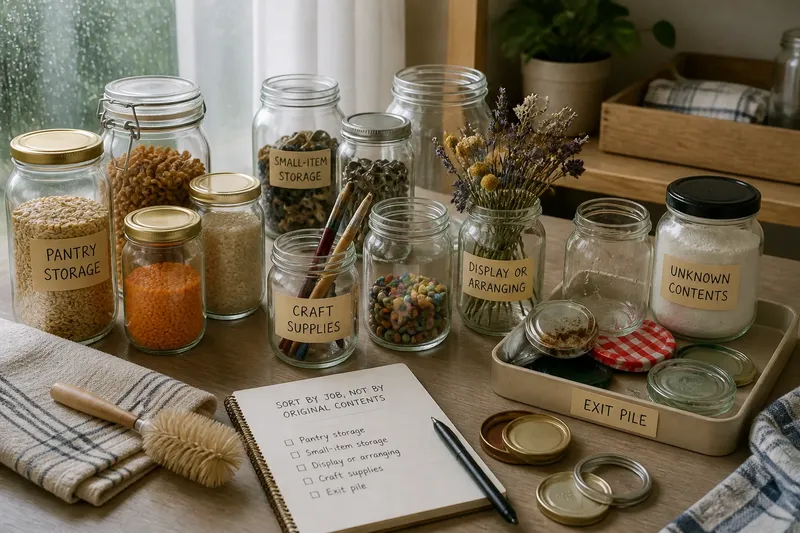
Sorting reusable jars is easier on a rainy afternoon, when you can spread them across a clear table and inspect each one in good light. Keep the job to clean, empty jars: separate the sound ones by likely use, and set aside damaged lids or containers whose contents you cannot identify.
This is not a plan for preserving food or processing containers. It is a way to decide which jars deserve cupboard space, which need a different household role and which should leave the collection.
Which jars should I keep?
Keep jars that are clean, dry, intact and useful for something you can name. A clear jar with an undamaged rim and a lid that fits properly may suit dry pantry goods, craft supplies or small household items, depending on its shape and capacity.
Set aside any jar with a crack, chip, sharp edge or badly damaged rim. Check the glass in good light, turning it slowly rather than running a finger over a questionable edge. A jar that is awkward or unpleasant to handle is not a good candidate for reuse.
Look at the lid separately. Put rusty, bent, split, deeply dented or poorly fitting lids aside, and do not treat a jar as a matched pair just because the lid appears close in size. If a lid is missing, consider whether you have a specific open-container use for the jar; otherwise, it may be clutter rather than a spare.
How do I sort jars by likely use?
Sort by the job the jar could do, not only by its original contents. A broad opening makes a jar easier to fill and empty; a narrow neck may suit a small bundle of dried stems or a pourable craft material, but is less convenient for objects that need to be retrieved by hand.
Make a few simple groups on the table:
- Pantry storage: clean jars with intact rims and compatible, sound lids, reserved for dry goods where the jar’s shape is practical.
- Small-item storage: wide-mouth jars suited to buttons, drawing pins, spare keys or other items that are easy to see and remove.
- Display or arranging: attractive jars with no lid, provided their edges are sound and their intended contents suit an open container.
- Craft supplies: jars that can hold brushes, beads or other materials without making them difficult to reach.
- Exit pile: chipped glass, unsafe edges, unexplained contents and jars that have no realistic use in your home.
Keep each group small enough to reflect actual storage needs. If you already have several jars that do the same job, retain the easiest ones to use rather than saving every apparently reusable container.
What should I do with a jar’s lid?
Match each lid to its jar before deciding whether either belongs in the reusable group. A lid that screws on crookedly, rocks, catches or no longer closes neatly should not be stored as a dependable pair.
Separate lids from jars that have different threads or shapes. If you cannot tell which lid fits, test it gently by hand without forcing it. A lid that does not settle naturally is a mismatch, even if it looks similar from above.
For an otherwise sound open jar, choose a use that does not depend on a lid. A jar might hold a few paintbrushes on a shelf, for instance, while a different container with a sound fitted lid keeps loose items contained in a drawer. Do not put the lidless jar back into the pantry-storage group by habit.
How can I deal with unknown contents?
Do not return a jar to circulation if you cannot identify what is inside it. A faded label, an unmarked powder or a sticky residue may leave the contents uncertain; keep the container separate until you can make a safe, informed decision about what it holds.
Do not taste or casually handle unknown material to identify it. If the contents could be hazardous, or you cannot determine how to dispose of them, seek guidance from the relevant local waste service or a qualified professional. Once a jar is safely empty and clean, assess the glass and lid as you would any other container.
For an invented example, say you find a jar at the back of a cupboard with an unreadable label and a pale substance inside. You set it aside without opening or using it, then ask the appropriate local service how to handle the contents; the intended result is that it stays out of household storage until its status is clear.
How should I clean jars for reuse?
Wash only jars you know are empty, using ordinary washing-up liquid, warm water and a clean cloth or bottle brush. Pay attention to the threads around the rim, the underside of the lid and any label residue, where crumbs or sticky patches can remain.
Rinse well and let the jar and lid dry completely before storing them. A tea towel can help with visible water, but a damp interior should not be shut away with the lid on. If a jar still smells, feels tacky or has residue you cannot remove through ordinary washing, leave it out of the clean reuse group.
Labels are useful when you choose to give a jar a new role. Remove the old one if its information could mislead, or cover it with a fresh label that names the new contents. Avoid writing a new description until the jar is clean and its intended use is settled.
Where should I store the keepers?
Put the jars you will use most where they are easy to reach, and store their matching lids beside them. A shallow tray or a divided cupboard shelf can keep small jars upright and prevent loose lids from becoming an unhelpful collection.
Store jars only after they are fully dry, with enough room to lift them without knocking neighbouring glass. Keep heavier jars on a stable, accessible shelf rather than balancing them above frequently used items. If space is limited, choose a few versatile shapes instead of keeping duplicates for imagined future projects.
Keep the set-aside pile visibly separate from the keepers until you have dealt with it. That makes it less likely that an uncertain jar or damaged lid will slip back into everyday storage during the next cupboard tidy.
What should I do with jars I reject?
Choose the next step according to the jar’s condition and your local recycling service. Sound, empty glass may be accepted for recycling, while chipped or broken glass can be handled differently from ordinary container glass; check the local guidance rather than putting every item in the same bin.
Keep broken pieces away from loose household rubbish and handle them cautiously. For a jar with an unknown substance, resolve the contents before considering the container itself. A damaged lid may belong in a different material stream from the glass, so separate it only if it can be handled safely.
Sorting reusable jars works best when each keeper has a plausible job and each rejected item has a clear destination. Make that decision before stacking the jars back in the cupboard, and the next rainy-afternoon tidy can be devoted to something other than rediscovering the same unwanted containers.