Why a Loose Hinge Starts to Creak
Why a loose hinge starts to creak depends on where parts rub or shift. Learn what to inspect first and when adjustment is no longer enough.
A creaking door often points to movement at a hinge, but the sound alone does not tell you which part is at fault. Why a loose hinge starts to creak is usually a story of surfaces rubbing, a fixing shifting or the door pressing unevenly; locating the sound first helps separate a modest adjustment from a repair that needs skilled attention.
What the sound means
A hinge has moving parts that let a door swing while its leaves remain attached to the frame and door. If the pin, knuckles or mounting screws shift, the parts may rub where they once moved cleanly. The resulting noise can be a squeak, scrape, click or groan, depending on the contact and the load.
A loose screw can let a hinge leaf move against the wood. A worn or bent hinge can make the pin bind as the door travels. The door itself may also have dropped or twisted, bringing an edge into contact with the frame. These causes can sound similar, so avoid treating every creak as a request for oil.
Notice when the noise occurs. A creak only near the beginning of the swing may point to a contact that appears as the door starts moving; a sound throughout the arc suggests rubbing that continues as the hinge turns. If the noise comes from the latch side rather than the hinge side, the door or latch may be the source instead.
Listen before adjusting
Choose a quiet moment and open the door slowly, then close it at the same pace. Keep fingers clear of the hinge gap. Listen close to each hinge in turn, without putting your ear or hand where the door could pinch you.
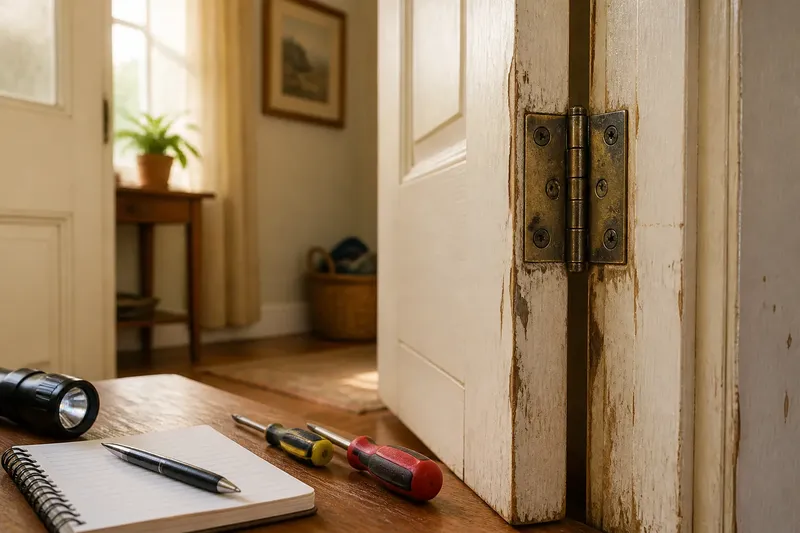
Watch the hinge leaves and screw heads as the door moves. If a leaf visibly lifts, shifts or rocks, the sound may come from movement at the fixing rather than friction inside the hinge. Look along the door’s edges for fresh rub marks, chipped paint or a gap that changes as it swings.
Say you hear a short scrape at the upper hinge and notice its leaf shifting slightly against the frame. You could stop moving the door, check whether the screw heads are plainly loose and record which hinge moves. If the leaf stays still but the scrape continues, that observation points away from a simple loose fixing and towards further inspection rather than repeated tightening.
A week of observation
A short routine makes it easier to tell a recurring fault from a one-off noise. You do not need to dismantle anything to gather useful clues.
- First opening: Move the door gently and note which hinge seems loudest, when the sound begins and whether the latch engages normally.
- Afterwards: Inspect the visible screw heads, hinge leaves and door edges. Look for movement, rubbing or fresh marks, and do not force a part that appears bent.
- Later that day: Repeat the same slow swing. If the noise changes with the direction or position of the door, note that difference rather than guessing at a cause.
- Next day: Check whether the door still sits evenly in its frame and whether any hinge leaf has shifted. A changing gap or persistent movement deserves more attention.
- Before making a change: Decide whether the evidence points to an accessible, visibly loose screw or to a damaged hinge, moving frame, heavy door or unclear source.
This observation period is not a reason to keep using a door that feels unstable. If it sags, catches sharply or appears likely to come away from its fixing, stop operating it and arrange suitable help.
When is adjustment enough?
Can I tighten a hinge screw?
If a screw is plainly loose and the hinge and surrounding wood look sound, a correctly fitting screwdriver may be enough to snug it gently. Stop if the screw turns without gripping, the wood crumbles or the hinge leaf shifts despite the screw being firm.
Should I oil a creaking hinge?
Lubrication may help when the hinge is securely fixed and the sound clearly comes from friction at its moving parts. It will not repair a loose fixing, a bent hinge or a door rubbing on its frame; identify the source before applying a suitable lubricant, and wipe away excess.
What if the screw hole is stripped?
A screw that will not hold can indicate damaged wood, not simply a need for a larger screw. Avoid improvising on a heavy or frequently used door, since the right repair depends on the hinge, door and frame.
When should I call a professional?
Get a carpenter or other suitable repairer to assess a door that sags, has a bent or cracked hinge, pulls away from the frame, or remains noisy after an obvious loose fixing has been addressed. Seek help as well if the door’s weight, construction or location makes handling it awkward or unsafe.
Choose the right repair
A minor adjustment is plausible when the hinge is intact, its mounting is stable and the door remains aligned. A repair is more likely when screws cannot grip, the hinge pin or leaves are damaged, the frame moves, or the door’s weight is pulling on the fixing. Creaking can be an early clue, but visible movement and alignment matter more than the volume of the sound.
For a door that needs attention beyond a gentle screw adjustment, describe what you observed: which hinge moved, where the sound began, and whether the door caught or sagged. That gives a repairer a useful starting point without committing to a guessed fix. Why a loose hinge starts to creak becomes clearer once you separate friction from movement—and that distinction helps you choose a sensible next action.
Follow the hinge or door maker’s instructions where available; for a damaged frame, heavy door or uncertain fixing, leave the repair to a qualified professional. Until then, keep the door’s use gentle and avoid hanging extra weight from it.