The Storage Box That Hides What You Need
Storage boxes can hide useful belongings in plain sight. Learn how to make stored items easier to identify and retrieve before adding another container.
A storage box can tidy a shelf and still make a needed item harder to find. Before adding one, check whether the real problem is poor visibility, an inconvenient location or belongings that no longer need to be stored.
Find the hidden cause
Start by naming the item you struggle to find and tracing the search. Do you open several boxes, move other belongings, or discover that the item is no longer there? Each answer points to a different fix: clearer identification, easier access or a contents review.
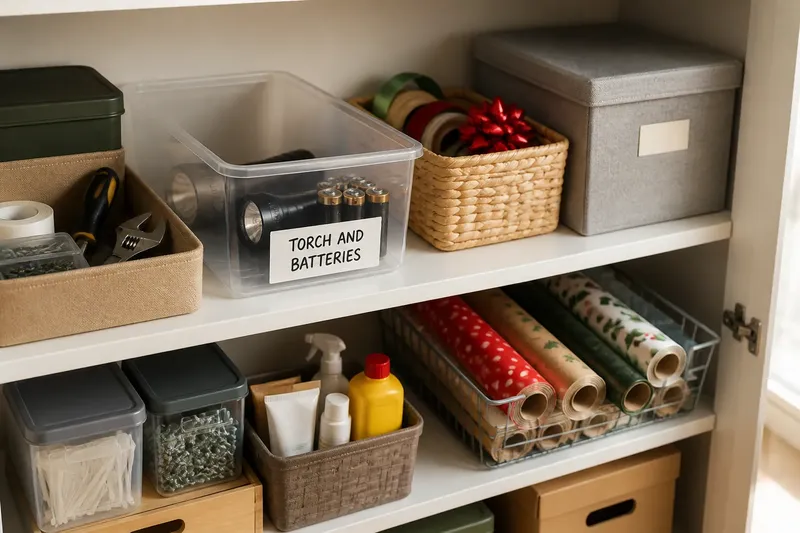
Say you have a cupboard with a torch, spare batteries, gift wrap and small repair supplies. You look for the torch and find it behind ribbon in an unlabelled box. In this invented situation, you take the torch and batteries out, check that they belong together, then place them at the front of a reachable shelf in a labelled container. The expected result is that someone looking for the torch can identify and reach the group without moving the gift wrap.
Map the search
Choose a troublesome shelf and write down the items you expect to find there. Take out only the containers needed to check their contents; set aside anything that belongs elsewhere rather than making a new box for it immediately.
For each item, decide whether it is used together with another item, protected from dust or spills, or simply out of sight. Keep objects together when they serve the same task, but do not combine unrelated belongings merely because they are small. A group that is hard to explain is often hard to search.
- Observation: You open a box and can identify its contents at a glance. If the contents form a useful group, then keep them together; otherwise separate unrelated items or review whether they belong on that shelf.
- Observation: A label names a broad category such as “miscellaneous”. If you cannot tell what you are likely to find, then replace it with a short contents label; otherwise keep the accurate label.
- Observation: You must move other containers to reach an item used often. If it can sit on an accessible shelf, then move it there; otherwise reduce or rearrange the items blocking access.
- Observation: A container is difficult to open or its contents spill out. If it is overfilled, then remove items that do not belong; otherwise choose a shape that suits the contents or leave them unboxed.
- Observation: A box contains damaged items or duplicates with no current use. If they are no longer needed, then consider an appropriate local reuse, recycling or disposal route; otherwise retain them in a clearly identified place.
- Observation: Another household member cannot tell where an item belongs. If the label or return place is unclear, then revise it using familiar wording; otherwise keep the arrangement easy to follow.
Choose the right container
A container earns its place when it protects belongings or makes a useful group easier to handle. A clear box can help you recognise contents, while a label on an opaque box can do the same job without replacing a container that already fits the shelf.
Use a short, specific label such as “torch and batteries”, and put it where it can be read while the box is stored. Masking tape and a marker suit a temporary arrangement; a reusable label or card is useful if the contents change. Update it when they do.
Leave items unboxed if a container adds an unnecessary search or makes them awkward to return. If a group needs protection, use a lid; if you need to see or reach it readily, consider an open shelf or tray. Choose based on the belongings and the cupboard, not on matching appearances.
Keep access simple
Put frequently used items where you can reach them without shifting other belongings. Less-used items can go further back or higher, provided they remain accessible and their contents are identifiable.
Give each group a clear place to go back to. If a container is too full to close comfortably, or items spill when you open it, remove unrelated contents or use a better-fitting arrangement. A tidy system has to work when you put things away as well as when you search.
Which storage box works?
Are clear boxes better than labelled ones?
Clear boxes show their contents when they are in view, but transparency cannot explain a mixed collection. Use a clear container or a specific label, and separate groups if you still have to rummage.
Should frequently used items be boxed?
Box them only if the container keeps a useful group together without slowing access. If a lid or awkward position makes retrieval harder, use an open shelf or another accessible place.
What should I do with an unlabelled box?
Open it, check what is actually inside and write a brief, accurate label if the contents deserve to stay together. If the items do not form a useful group, separate them or review whether they need to remain there.
When should I get rid of a storage box?
Consider removing it when it conceals contents, obstructs access or has no useful protective purpose. First check whether a clearer label or different position would solve the problem; if not, store the belongings another way or review whether they are still needed.
Check the arrangement
Return the items to their chosen places, then look for one that you regularly need. Check whether its label can be read, whether you can reach it directly and whether it has an obvious return place. If any part of that search still depends on remembering what an opaque box contains, improve the label or grouping.
For the invented cupboard, the starting point was an unlabelled box with the torch hidden behind ribbon. The change was to separate the torch and batteries from gift wrap, label their container and place it at the front of a reachable shelf. The expected trade-off is that the gift wrap may occupy a less prominent spot, while the torch becomes easier to locate; the arrangement is useful only if both groups still fit and can be returned easily.
When reviewing storage boxes, judge each one by what it does for a particular group: protection, clear identification or easier handling. If it delivers none of these without making access harder, change the arrangement before adding another container.